Our Solution
The SOLS Insight
Poverty repeats itself because the education pathway breaks at predictable points, and the earlier it breaks the harder it is to recover from. SOLS Foundation’s research puts the objective simply: keep a young person on that pathway for as long as possible.
English is where the break shows first. SPM results in 2024 were the best since 2013, and in announcing them the Education Minister named the gap between urban and rural candidates as one of the areas still needing attention. Around 150,000 students a year finish SPM without a credit in English, and the Education Blueprint reported that poor English among fresh graduates had been one of the top five issues facing Malaysian employers every year since 2006.
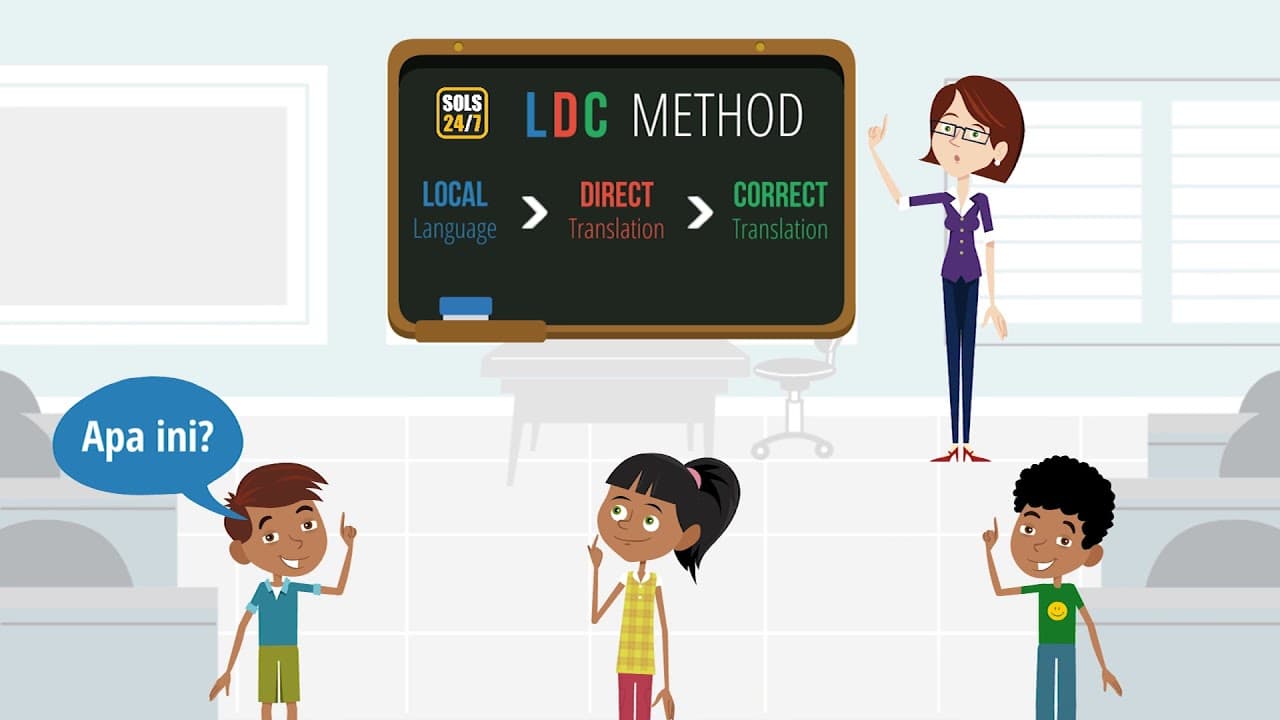
SOLS edu’s mission is to close that gap with free, high-quality education. We build English, digital skills and career skills courses for the work employers are hiring for, taught in the learner’s own language so new material is easier to take in.
Sources: MoE Malaysia, SPM 2024 results analysis; Malaysia Education Blueprint 2013–25.
Stages of the pathway
Our research traces where a low-income young person is likely to end up, based on the education they get along the way and the obstacles they meet.
Having access to support at key stages is what enables a low-income child, youth or adult to move out of the cycle of poverty into the middle class (M40).
Our in-depth review of the pathway of a low-income individual and their predicted outcome provided three main takeaways:
- Middle class is the outcome worth aiming at, because it brings quality of life, financial resilience and room to keep progressing. SOLS Foundation works to a household income above RM6,000 a month, comfortably inside the M40 band as the Department of Statistics defines it, alongside a social network that makes it harder to slip back into poverty.
- Most of those who stay in poverty leave education at one of two points: during secondary school, or before finishing tertiary study.
- To qualify for a middle class income, a young person has to complete a minimum of SPM and a form of vocational training, apprenticeship or tertiary study, and get support alongside it.
Our Solution Design
The long term goal is systemic change, so the solution is built around three impact outcomes, and the pathway it supports leads to four destinations: university, TVET, self employment or entrepreneurship, and apprenticeship.
Phase 1. Vocational training
Given the existing programmes, expertise and accreditations in vocational training for young people, SOLS Foundation has evolved the SOLS Academy of Innovation into its Solar Academy and TVET Academy, using both digital and offline delivery.
Visit the Solar Academy
Phase 2. The other three pathways
Continue to support the other three pathways with SOLS Foundation's Skills Hub, to show its long term impact and advocate for it to be implemented on a national scale.
Visit the Skills Hub
Phase 3. Earlier in school
Work backwards into primary and secondary school education, to increase the rate of progression before SPM.
Visit SOLS edu ACE
Where SOLS edu fits
Those phases are SOLS Foundation’s, delivered through its academies and its Skills Hub. SOLS edu builds the free apps that carry the same pathway to anyone with a phone, at the two points that decide the outcome.
Complete a minimum of SPM
SOLS edu ACE
A free app for SPM English, the subject where the gap shows first. A placement test finds the weak areas, then the study plan works on those, in the formats the exam actually uses.
Then training, and support alongside it
Career Courses
Free self-paced courses in career and digital skills, taught in the learner's own language, for finding work after school and moving up once you are in it.
What has to change for it to work
The model is built around three outcomes, each one reaching further than the last. Education has to reach people. Reaching them has to turn into income. And enough of that has to shift the system that produced the gap in the first place.
Impact A
Education reaches people
- Digital delivery
- Self-paced courses a learner works through alone
- Interactive teaching, mentoring and counselling
- Offline delivery
- Direct teaching, mentoring and counselling
- Reached through
- Direct access, for an individual
- Indirect access, for a group
Impact B
Education turns into income
- Job opportunities
- Development training
- Progression support and mentoring
- Learning and feedback loops
- Entrepreneurship support
- Training
- Financing
- Mentoring and support
Impact C
The system itself changes
- Business and NGO partnerships and tie-ups
- Partnership set-up, management, and learning and feedback loops
- System change: funding, credit, quotas, rights, support system
- Advocacy, policy and regulatory change
- Community engagement and social awareness
- Awareness campaign, outreach and engagement
Our Skills Library
SOLS Foundation’s programmes are built around three skills areas: hard skills, life skills and professional skills.
Each area breaks into skill blocks and topics, with more than sixty modules between them building towards complete personal and professional development. SOLS edu’s own courses draw on the same library.
Hard skills
- English communication
- Digital career tools
- Solar PV installation training, with SOLS Foundation's Solar Academy
Life skills
- How to apply for college
- Self discovery
- Study effectively
- Communication skills
- Future goals
- Learning and developing
- Handle my finances
- My wellbeing
Professional skills
- How to apply for a job
- Job readiness
- Transition from studies to work
- How to be professional
- Dealing with conflict
- Career progression
Our Technology
Scaling the programme to tens of thousands of students yearly is possible because of the technology we have built and keep improving: a website, a web app and an Android app.
It gives nationwide and region-wide access to interactive lessons. Courses are broken into short pieces and ordered around what the learner already knows, so each skill is practised until they have it.
Reporting systems
- Real time progress monitoring
- Live analytics
- Automated reporting
Machine learning
- Adaptive learning algorithms
- Competency development
- Revision
Communications
- Messaging system
- Direct chat
- Group chat
Support systems
- Gamification
- Notifications and reminders